




M13

- A high-performance material capable of expressing purpose-specific functional receptors on its surface
-
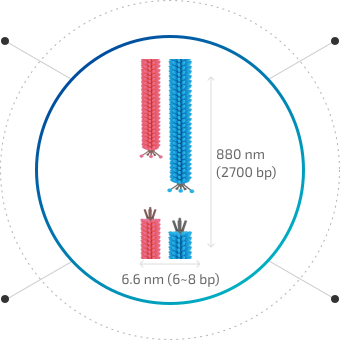
The M13 bacteriophage is a type of virus harmless to humans and can be surface-engineered for various applications.
It is an emerging advanced material widely utilized in high-performance energy devices, semiconductor components, and other next-generation technologies.
In particular, its unique characteristics as an olfactory receptor have drawn significant attention as a key solution for the commercialization of electronic nose technologies.Wide range of applications
Customizable material properties

Large-scale production
Ease of mass production via E. coli host


Process efficiency
Synthesized with uniform size

Safe material
FDA-approved safe substance
Contact us for a quotation regarding M13 Bacteriophage purchases
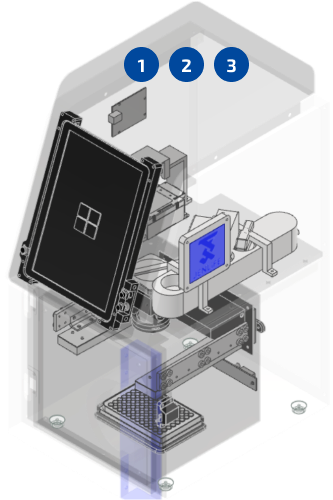
PEN (Pioneer Electronic Nose)
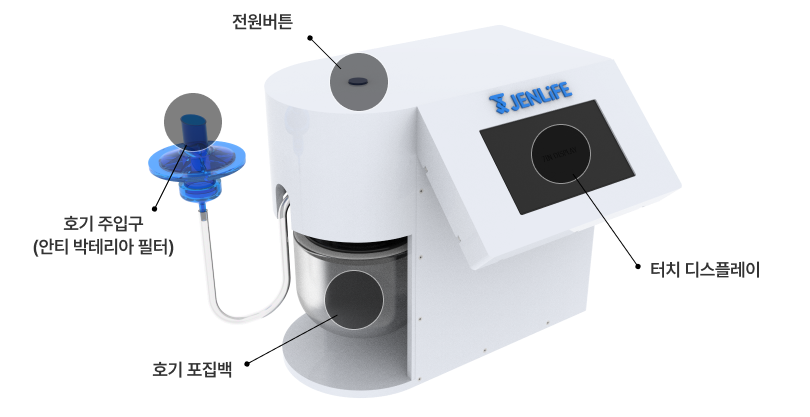
- Light sourceCool White LEN (410 nm ~ 750 nm)
- Measurement cycle1510 s
- Cleaning cycle900s
- Camerapen_camera_val
- Pumping speedpen_pumping_speed_val
- Maximum pressure120 kPa
- SensorPEN sensor
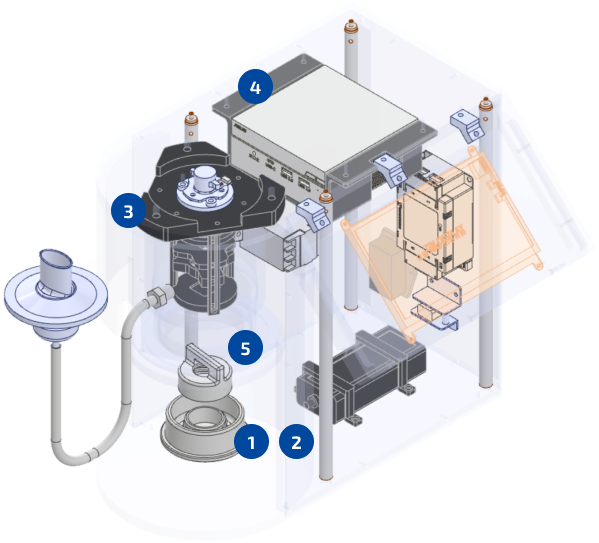
- Internal size100 x 205 x 305 (D x W x H mm)
- Dimension500 x 305 x 475 (D x W x H mm)
- SoftwarePioneer Vision Software
- Temperature (operation)0 °C to 55 °C
- Input voltagepen_voltage_val
- Complex gas analyzer utilizing functional M13 phage-based sensors
-

Human breath analysis system utilizing an intelligent electronic nose

# Excellent resistance to various gas and organic solvent vapors
# A stable material providing flexibility in high-temperature rangesTedlar® Gas Sampling Bag
Phase 1 Clinical accuracy
75.6%

As of 2022
62 participants completedPhase 2 Clinical accuracy
80.8%
- Stage 1 - 79.6%
- Stage 2 - 78.9%
- Stage 3 - 81.2%
- Stage 4 - 83.6%
As of October 2023
423 participants in progressPhase 3 Clinical accuracy
In progress
2026 Goals
Achieve 900 cases annuallyLung cancer clinical research status
Related patents and papers
| Title of invention | Application(registration) number | Distinction | Country of application |
|---|---|---|---|
|
①DISCOLORATION SENSOR BASED ON VIRUS, SENSOR FOR DIAGNOSING LUNG CANCER, AND DETECTING SYSTEM |
10-1760175000 | Patents registered | Republic of Korea |
|
②ELECTRONIC NOSE SENSOR FOR DIAGNOSING LUNG CANCER AND ELECTRONIC NOSE SYSTEM FOR DIAGNOSING LUNG CANCER THEREOF |
10-2020-0104579 | Patent applications | Republic of Korea |
| PCT/KR2023/012364 | PCT | ||
|
③M13 phage-based color sensor analysis method using hyperspectral imaging |
10-2020-0171527 | Patent applications | Republic of Korea |
|
④BIOMIMETIC VIRUS-BASED COLORIMETRIC SENSORS |
US10590459 | Patents registered | United States of America |
|
⑤DETECTING SENSOR FOR BREATHING RESULTS OF CELL, SYSTEM OF ESTIMATING CELL POPULATION SIZE, AND SYSTEM OF DISTINGUISHING CELL |
10-17640010000 | Patents registered | Republic of Korea |
| Year | Journal title | Vol. , No. : Pages | IF |
|---|---|---|---|
| 2011 | Nature | 478 , 7369 : 364 | 69.504 |
| 2014 | Nature Communications | 5 , 1 : 3043 | 17.694 |
| 2021 | Biosensors and Bioelectronics | 177 : 112979 | 12.545 |
| 2021 | Biosensors and Bioelectronics | 194 : 113567 | 12.545 |
| 2022 | Biosensors and Bioelectronics | 196 : 113693 | 12.545 |
PIM (Pioneer hybrid Interface Material)
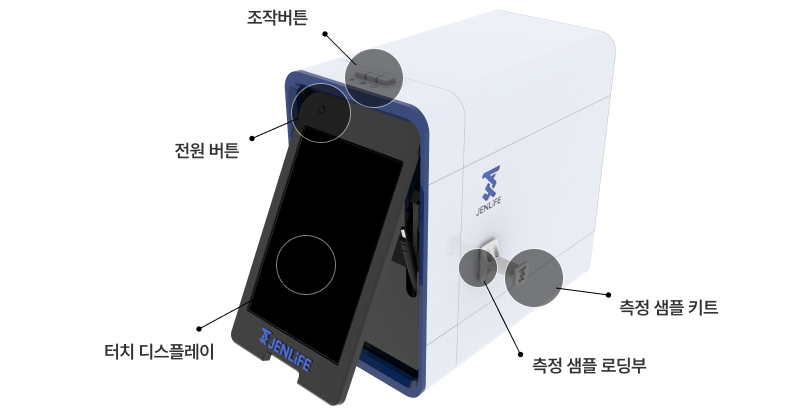
- Laser633.8 nm CW single mode fiber lase
- Laser power50 mW
- Spectrometer resolution (FWHM)0.08 - 7.24 nm
- Temperature (operation)0 °C to 55 °C
- CPU11th Gen Intel® Core™ i5-1135G7
- GraphicIntel® UHD Graphics
- Memory4267 MHz LPDDR4X RAM
- WifiWi-Fi 6(IEEE 802.11 a/b/g/n/ac/ax compatible)
- OSWindows 11 Pro
- Power supply60W power supply with USB-A (5W) (65W total)
- Optical signal complex liquid analyzer based on functional M13 phage and metal nanoparticles
-
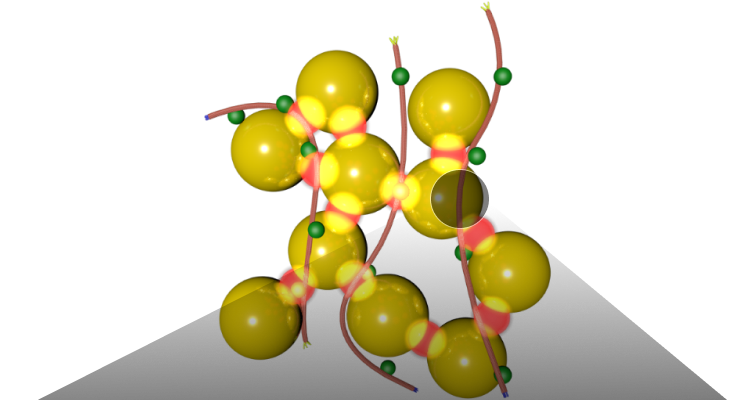
 Nano material
 Metabolite
 Functional polymer
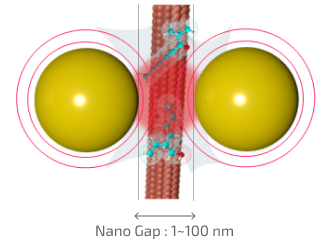
Hybrid interface
- Absorption through hybrid interface
- Spectrum control → Optical signal optimization
- Utilizing surface plasmon amplification phenomenon → Target material
- Signal amplification (High sensitivity)
Related patents and papers
| Title of invention | Application(registration) number | Distinction | Country of application |
|---|---|---|---|
|
①Nanogap structure with triple stacked structure |
10-1760175000 | Patents registered | Republic of Korea |
|
②PLASMON HIERARCHICAL STRUCTURE HAVING NANOGAP AND MANUFACTURING METHOD THEREFORP |
10-2020-0104579 | Patent applications | Republic of Korea |
| PCT/KR2020/018597 | PCT | ||
| US17635825 | Patent applications | United States of America | |
|
③A method for spacing design of nano-array structures |
PCT/KR2023/012364 | PCT |
| Year | Journal title | Vol. , No. : Pages | IF |
|---|---|---|---|
| 2014 | Optics Letters | 39 , 15 : 4571 | 3.560 |
| 2018 | ACS Applied Materials & Interfaces Journal | 10 , 12 : 10388 | 10.383 |
| 2022 | Nano Letters | 22 , 12 : 4702 | 12.262 |
| 2022 | Nanoscale | 14 , 44 : 16450 | 8.307 |
| 2022 | ACS sensors | 8 , 1 : 167 | 9.618 |
PIT (Pioneer kIT)
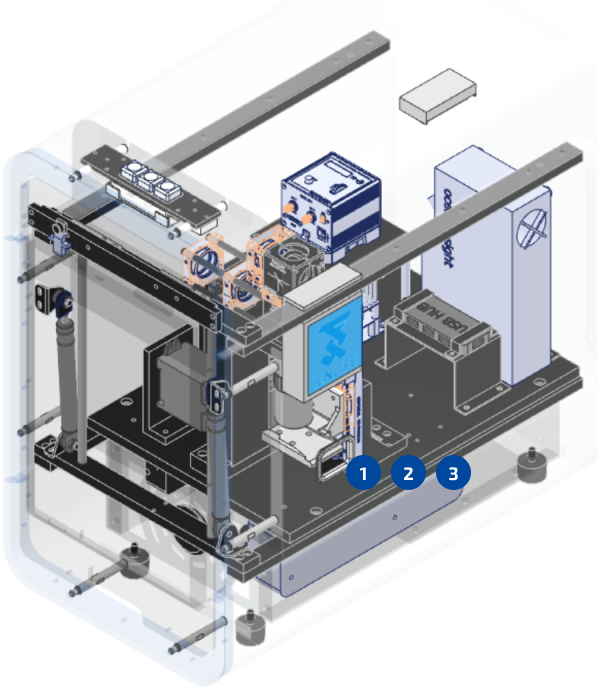
- Camera sensorSONY Exmor CMOS IMX 183
- Resolution20 MP
- Max frame rate60 fps
- Camera lensMVL35M23
- Dimensions374 x 484 x 642 mm
- Hot plate temperature range25 to 50˚C
- LED color temperature6500 K
- LED maximum power output200 W
- Protection circuitsSurge and burst protection
- Input voltage220 V
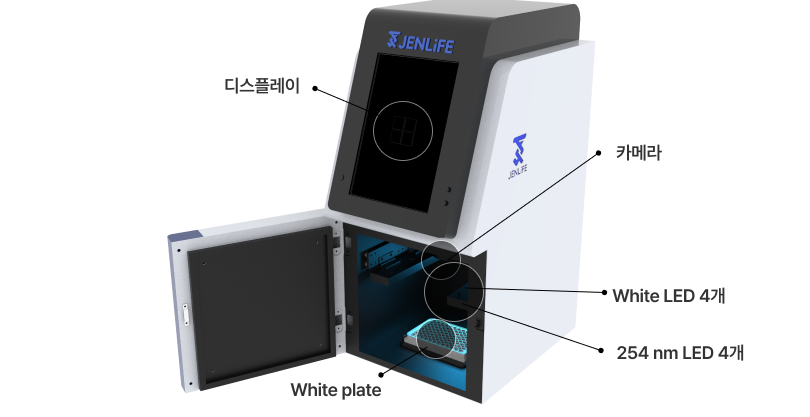
- Target material detection instrument utilizing ligand substitution reactions
-
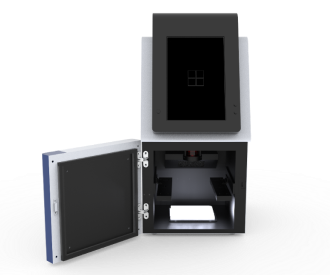
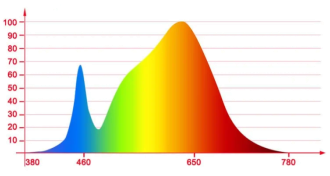
White light LED
Reflectance spectrum (or RGB) measurement modeUses a cool white light LED (410 nm - 750 nm range)
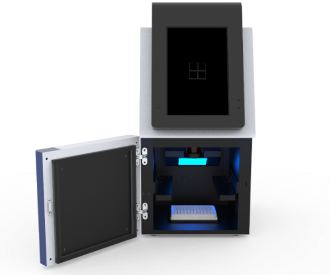
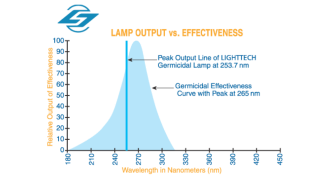
White light LED 254 nm
UV-C fluorescence (or RGB) spectrum measurement modeUses a 253.7 nm UVC LED
Related patents
| Title of invention | Application(registration) number | Distinction | Country of application |
|---|---|---|---|
|
①Glucose color sensor, glucose discoloration kit, and sensing method using thereof |
10-20200186050 | Patent applications | Republic of Korea |
|
②COLORIMETRIC BIOSENSOR, DISCOLORATION KIT, AND SENSING METHOD USING SAME |
PCT/KR2020/019329 | Patent applications | Republic of Korea |
|
③COLORIMETRIC BIOSENSOR, DISCOLORATION KIT, AND SENSING METHOD USING SAME |
US17635880 | Patent applications | United States of America |
|
④PAPER TYPE DISCOLORATION SENSOR AND USES THEREOF |
10-2022-0104579 | Patent applications | Republic of Korea |
|
⑤Kimchi ripening monitoring color sensor |
10-2022-0139328 | Patent applications | Republic of Korea |